OpenAI Visits Campus for a Full Day of Codex Training, Recruiting, and Student Hackathon
On Tuesday, March 10, 2026, Enterprise Technology, Texas Career Engagement, and the University Library hosted OpenAI for a full day of hands-on Codex training, student recruiting, and a campus hackathon built around solving university problems.
One day, three moments, and a strong signal about where AI work on campus is headed.
From morning training to evening demos, the day brought together ET, Career Services, the University Library, OpenAI, and campus participants across students, faculty, and staff.
On Tuesday, March 10, 2026, Enterprise Technology, Texas Career Engagement, and the University Library hosted OpenAI for a full day of activity at UT Austin. The day moved from hands-on learning, to student recruiting, to live building with Codex, creating a rare chance for the campus community to engage the technology and the people behind it in one place.
The program was designed to be practical. Rather than centering on abstract AI discussion, the day focused on direct use, career connection, and rapid prototyping around university problems that mattered to participants.
Morning: hands-on Codex training
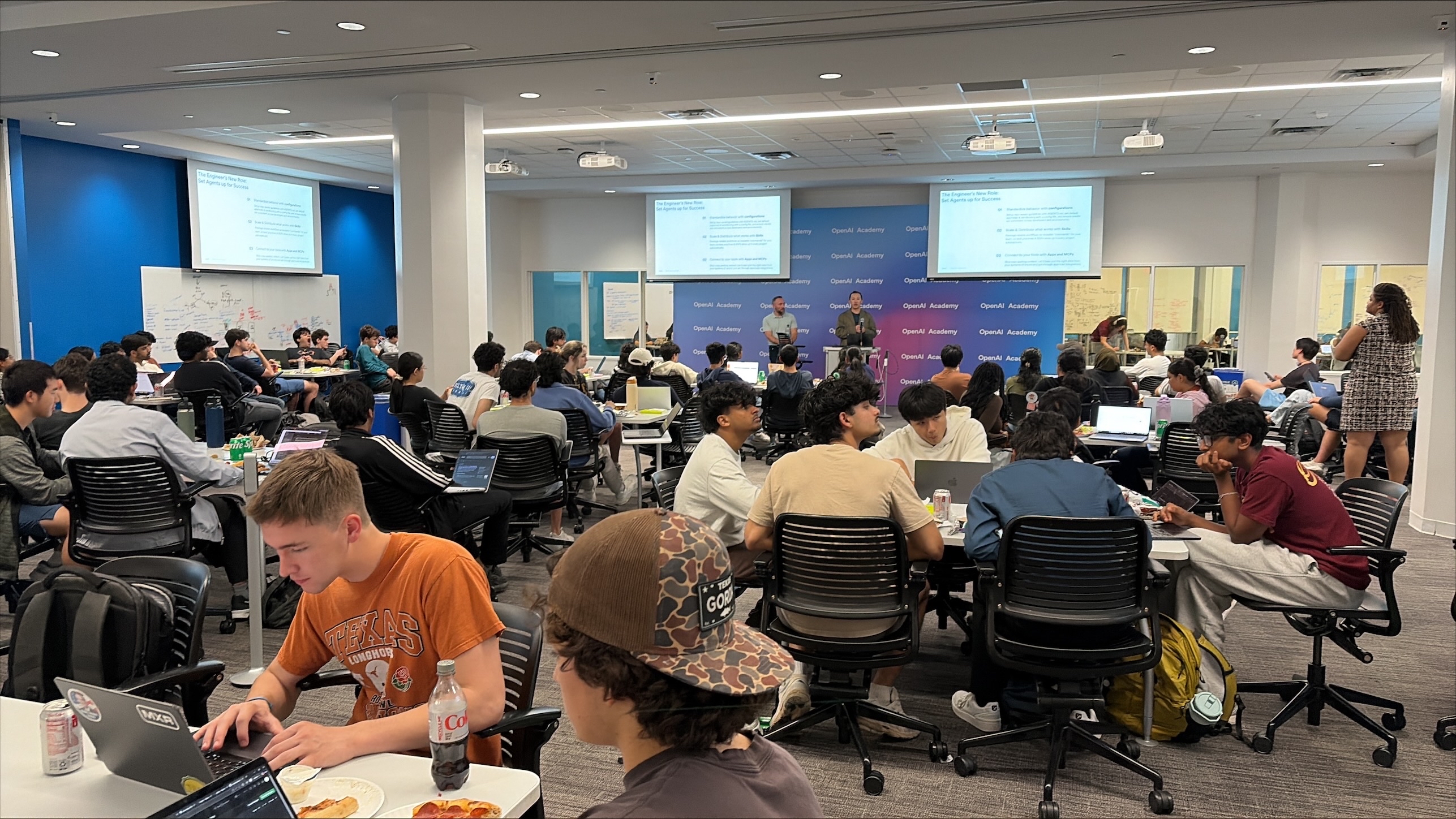
The day began with a hands-on Codex training session that brought together about 40 people from across faculty, staff, and students. The session gave participants direct experience with the tool in a setting that emphasized experimentation, prompt refinement, and practical workflows.
That cross-campus mix mattered. It made the room feel less like a product demo and more like a working campus conversation about how AI-assisted development could support teaching, operations, and student creativity.
Midday: recruiting and conversation
At lunch, the focus shifted to students. A recruiting event created space for students to meet OpenAI staff, ask questions, and connect classroom curiosity to real career paths. That moment complemented the morning training by grounding the technology in people, teams, and opportunities.
The structure made the event stronger. Training built confidence, recruiting created connection, and the evening hackathon turned that momentum into visible demos.
Evening: a fast-moving campus hackathon
At 5:30 p.m., the event shifted into a two-and-a-half-hour hackathon. Students broke into teams, proposed solutions to problems across the university, and used Codex to build demos quickly. The pace was fast, but the format made sense: identify a campus challenge, organize around it, and see how far a team could get in one focused sprint.
The hackathon highlighted something important for ET and campus partners. Students are not only interested in AI tools as end users. They are ready to use them as builders, translating university needs into prototypes that can be discussed, tested, and improved.
- About 40 people attended the morning hands-on Codex training session.
- Students connected with OpenAI staff during the midday recruiting event.
- Hackathon teams proposed university-focused ideas and built working demos in a two-and-a-half-hour sprint.
It was a great day because it connected learning, opportunity, and making in the same arc.
A useful model for future campus AI events
The event showed the value of bringing campus units together around a shared program model. ET, Career Services, and the University Library each brought a different kind of strength to the day, and OpenAI's presence made the experience feel immediate and relevant for students, faculty, and staff alike.
Just as important, the event offered a glimpse of how future campus AI programming can work best: put real tools in people's hands, create room for conversation, and end with something built.